

MACY'S LOVELAB
2025
PRODUCT & EXPERIENCE DESIGN
_pn.png)

PROJECT OVERVIEW
The NRF Foundation’s University Challenge is a national competition where students solve a real retail challenge and pitch their solution to executives over months of stages of intense competition. This year, Macy's partnered with the NRF Foundation to get fresh student-led strategies to diagnose a real business opportunity, design an end-to-end concept, prove it with financials, and pitch it directly to company leadership.
I was selected with three other UNT students to represent UNT at NRF 2026, partnering with Macy’s. Over the course of a year, we researched consumer behavior, identified gaps, created a robust idea with prototypes, competed against 60+ teams, and earned first place on the national stage.
PROBLEM
Between 2023 and 2024, Macy’s net sales fell 3.5%, their biggest marketing loss being on gift shopping.
This project called my team to address a cultural shift: shoppers want experiences that feel personal, not generic. This is because people feel less seen, more time-pressed, and more careful with money.
We had to translate that emotional need into something Macy’s could actually execute at scale through research, audits, and a modern, AI-aware experience.
Role
UX/UI Designer, Product Designer, Student Lead
Company
Macy's, National Retail Federation Student Foundation
Team
Angel Ntenyi - Financials Student
LaTasia Burton - Merchandising Student
Marcos Rodriguez - Merchandising Student
Malini Ratnam - Advisor
Richard Last - Digital Commerce Mentor
Jeff Haddox - Digital Commerce Mentor
Laura Storm - Financials Mentor
Timeline
10 months,
Four rounds of competition
2+
Surveys and interviews
100+
Survey responses analyzed
12 Workshops
facilitated with team and mentors
MY CONTRIBUTIONS
20 Page
pitch deck & interactive prototypes
3d + Digital Mockups
In-person and online experiences


Photo from NRF Foundation University Challenge honorees page
Here’s how we created an award-winning concept that explores individual representation in gifting for Macy’s that could earn them $67.9M in profit in 5 years.
20+
Initial unique concepts and ideas
Research
Deep research into trends
3 Personas
Based on survey responses
AS A TEAM
4+
Notable pivots
01: FRAMING THE OPPORTUNITY
FIRST, KNOW YOUR AUDIENCE.
We found that there's an ongoing shift in user thinking when it comes to gifts:
74%
of customers say personalized experiences make them more likely to buy.
52%
of Gen Z and 44% of Millennials planned to give handmade or personalized gifts in 2024 according to data trends.
This is due to both a growing need for the gift to tell a story, tighter budget constraints, and the mass accessibility of shopping.
We researched Macy's target audiences, including the demographics of their online and in-store shoppers in order to position our personas and survey correctly.
PERSONA CREATION:
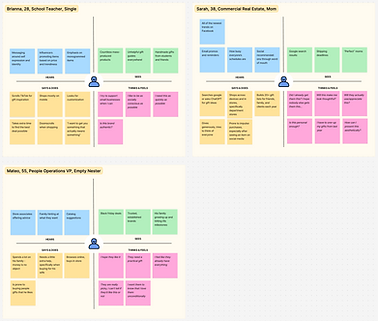

Macy’s customers are diverse, multigenerational, and are, on average, middle class or above. The biggest target for in-store shopping is Gen-X for online, it's Millennials.
Macy’s brand recognition is huge, but there have been some negative responses to most new initiatives. When it comes to competition, Target, Nordstrom, and Amazon are preferred for shopping.
02: KNOWING THE USER
SURVEYS AND INTERVIEWS!
To better understand our target users, we surveyed 100+ participants and used 17 questions to explore gifting behaviors, pain points, motivations, and emotional drivers: revealing clear needs and opportunities.
“Macy’s has great stuff, but I usually end up on Etsy when I want something that feels personal in my price range.”
- Millennial Female Respondent
“I always think of Macy’s during the holidays: it’s nostalgic. But I wish it felt more current and easier to shop for actual meaningful gifts.”
- Gen-Z Female Respondent
When it came to buying, three factors were crucial: uniqueness, personalization, and quality
Customization + Quality Drive Decisions
88% said that Uniqueness, Customization, or Quality matter most when gift shopping
01
Gifting = Relationship Storytelling
91% of shoppers care deeply about what gifts say about their relationships.
02
Personalization Increases Willingness to Pay
Gifters are willing to spend 15 - 30% more for quality + personalization.
03
NEXT, EVALUATE THE MARKET.
What are competitors doing with this shift towards a need for personalization, what are current user pain points, and where is the perfect Macy's sized gap?

ETHNOGRAPHY
To better understand the in-store experience, we conducted ethnographic observation at Macy’s, examining merchandising, customer traffic patterns, employee to customer interactions, and the broader in-store shopping journey. Experiencing the environment firsthand helped us identify where the concept could naturally fit within the store, how much employee involvement it should require, and how the experience could align with existing Macy’s behaviors, operations, and brand expectations.


How might we design a solution that aligns with Macy's brand, is current with the market, and fulfills the sentiment and uniqueness that users are looking for?
03: EXPLORING IDEAS AND OPTIONS
DRIVING INNOVATION FROM RESEARCH:
We sorted our research into three key dimensions: user needs, brand objectives, and market opportunities. Our goal is to converge these insights into a single, cohesive experience strategy.


RAPID IDEATION
This rapid ideation session helped us step into the user’s mindset while also strengthening team alignment. Co-creating, riffing on each other’s ideas, and thinking out loud made this one of my favorite moments in the process. We each brought our own powerful ideas!

After a working session with our mentors, we converged on a primary concept:
Offering engraving and embroidery so shoppers can add a meaningful word or name to the product.
Even with a clear direction, our problem-solving wasn’t finished. We needed to explore how to extend this into an omnichannel, gifting-forward experience that feels relevant year-round: how it should look, taste, and smell as a sensory brand moment, and how to shape it into a compelling, story-driven pitch.
THE INITIAL PITCH
After several weeks of research, our first sprint concluded with a stakeholder workshop involving faculty advisors, student association members, merchandisers, financial advisors, and industry mentors. It was the first of roughly 10 stakeholder review sessions we would participate in throughout the project.
We entered the room with a strong body of research, but we had not yet learned how to translate that research into a clear, persuasive recommendation. That first presentation exposed an important gap: finding a compelling insight and communicating why it matters are two different skills. The feedback we received helped us sharpen our story, prioritize the strongest evidence, and begin turning research findings into a concept stakeholders could understand and evaluate.


These were the notes we took from the first session. 7 pages total!
PIVOTS AND ITERATIONS
Macy's LoveLab didn’t arrive fully formed: we earned it through iteration.
It would be months before I began prototyping a final design.
We started with a collection of individually reasonable ideas, but over the course of a year, research, business constraints, competition, Macy's priorities, and team growth forced us to turn those ideas into one coherent omnichannel system.
Same slide, different iterations:

Week 3

Week 6

Week 8

Final
Through dozens of iterations, we made four notable pivots:
Pivot 01: From solving every gifting problem to one cohesive experience
We started with a lot of ideas for how Macy’s could improve gifting: bridal and pet gifting, delivery lockers for younger shoppers, gift-bundle kiosks in airports and universities, and more. Each idea addressed an opportunity, but together, we were trying to solve too many problems at once. As the project developed, we realized the stronger opportunity wasn't to create a separate solution for every type of shopper or occasion, but to build a flexible experience that could adapt to different needs. People, businesses, occasions: they are all variable.


We initially envisioned a Pinterest-like webpage with a personality quiz and AI agent for personalized gift discovery. While the concept was flexible, it ultimately limited the experience to online shoppers and narrowed who could engage with it.
Pivot 02: From targeting Gen Z to designing for Macy’s broader customer base
We had hypothesized that Macy’s needed to better reach younger shoppers, particularly Gen Z. Our research challenged that! While younger customers are an important audience, we couldn't overlook the customers already shopping at Macy’s. From our surveys, they had the best view of Macy's, and were more likely to shop there for gifts. This changed our idea from trendy to timeless.


We thought: the kiosks in airports, universities, and public spaces could help bring Macy's everywhere! The issue was, what do we put in them to make it perfect for everyone? This also affected the business model: who would stock them? What would happen if they were vandalized or robbed? Though we pivoted from this idea, the "what kind of gifter are you" quiz that we developed helped us set up the main idea: customization!
Pivot 03: From 1-800-Flowers collaboration → building gifting in-house
Now that customization would be the main priority of the product, how would we make that happen? We had explored a collaboration with 1-800-Flowers/Things Remembered as a way to expand Macy’s gifting capabilities without having Macy's do in-house personalization. However, our user research revealed that the partnership didn't resonate with our target audience: interviews had notably negative perceptions of 1-800-Flowers. Rather than forcing the collaboration into our final concept, we used the research to eliminate it.
Pivot 04: From an undefined budget to a $5M implementation model
Without a defined budget, we had few constraints on what the experience could become. Instead of treating that ambiguity as permission to design without limits, we established a $5M implementation model and used it to pressure-test our ideas, and create a big return on investment for the business model. This, and Macy's highlighting of their "first 50" and "next 75" stores during closures, pushed us toward a tiered in-store strategy, with proof of concept stores. As we developed the concept, we had to balance what customers might want with what would actually create value for Macy’s. With thousands of products and an undefined implementation cost, we couldn't simply include everything. We began thinking more critically about which products, features, and experiences could generate the strongest return relative to their cost. Financial modeling became a way to prioritize the experience rather than something we added after the design was finished.
04: DEFINE THE NEW CONCEPT
SOLUTION VISION
Macy's LoveLab is a personalization-driven enhancement to private label products at Macy's. It exists:
-
Full scale, with on-the-spot embroidery and engraving booths in the top performing Macy's stores,
-
As a digital ordering kiosk in Macy's "Next 75" stores to save on cost,
-
And online, nation-wide, as a personalization engine
It also brings personalization to the shopper with a personal AI agent online.

Personalize a coke kiosk
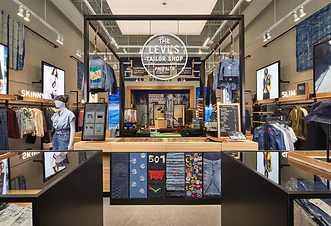
Levi's Tailor Shop

Nike
Challenge 01: Three rounds, three priorities
Each round required a different focus: concept development, video + storytelling, live Q&A, and final pitch. We had to keep refining the product while constantly changing how we communicated it.
Challenge 02: Keeping the team moving
Keeping a large project moving across changing responsibilities and deadlines is difficult, especially throughout the course of a year. Staying organized, setting reminders for everyone, and delegating work was my savior!
Challenge 03: Designing before everything was figured out
We often had to communicate ideas before they were fully designed. We learned to prototype just enough to tell the story, then refine the experience as the concept became clearer.
Challenge 04: Becoming better presenters
Our first presentation was rough. We worked tirelessly to speak confidently, memorize speaking points, and become more comfortable with each other and the concept. By the finals, we had completely transformed how we communicated the work, and ultimately won the competition.
CHALLENGES
PITCH VIDEO
05: CREATING A PROTOTYPE
I led the visual design and user experience of our product concept, including designing the accessible points of engagement through all of Macy’s channels: new actions online, and an in store experience.
While my teammates focused on marketing strategies, financial planning, and product curation, I translated our ideas into tangible, interactive designs, ensuring the concept was intuitive, engaging, and aligned with Macy’s brand.
DESIGN

WIREFRAMING




After presenting the mobile wireframe, I quickly realized a few gaps. The color palette skewed red in a way that didn’t feel authentically Macy’s, and the experience wasn’t yet seamlessly integrated into the existing Macy’s site.
As I asked my team to tap through the flow, it also became clear that the AR feature needed refinement to feel more intuitive.
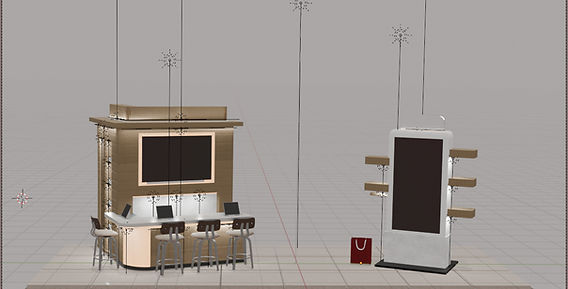
For the in-store kiosk, the 3D rendering was inspired by the elevated, premium vibe of modern malls. The design leans on timeless, simple colors and a clean layout so the experience is easy to scan and understand at a glance in a busy mall environment, making the interaction feel both premium and accessible.
MEASURING SUCCESS

The goal wasn't simply to get customers to use LoveLab. It was to create enough incremental value for Macy's to justify the investment.
Revenue, Engagement, Adoption, and Return were all KPIs to LoveLab's success. We also built out a 5 year financial model: this part was almost more difficult than the concept! We had to consult financial professionals to ensure reasonability and that it made sense.
🎉 FINAL DESIGN 🎉
_pn.png)
In-Store Booth and Kiosk guide users through gift selection with personalization options.
Built with Blender, edited in Photoshop
DIGITAL WALKTHROUGH

Personalized Gifts page seamlessly built in to Macy's' existing website:
-
Bestsellers and visual guides with clear communication
Online
Built with Figma

User-friendly customization with 11 color choices, 3 fonts, 32 icons, and complete text/number input.
Online - Product Pages

What if a customer needs a little extra help?
-
GiftGuide AI is the Macy's personal shopper in your pocket.
Online - Added Intelligence/CX
05: PITCHING & VALIDATING THE CONCEPT
FINAL PRESENTATION TO FOUR OF MACY'S VPS IN NEW YORK

After months of collaboration, iteration, and mentor feedback, including four rounds of rigorous elimination, we developed and refined a final concept, complete with financials, launch timelines, a product array, research and prototypes.
As a Team, we delivered:
-
A cohesive omnichannel gifting concept aligned with Macy’s brand
As the UX/UI member and team lead, I successfully delivered:
-
Prototypes and high-fidelity mockups for both in-store and online experiences
-
A visually compelling 20-Slide pitch deck
-
Direction and scripting for our 90 second pitch video
-
Organization and delegation
-
Communications between stakeholders
Outcomes & Takeaways:
-
Gained hands-on industry experience in product strategy
-
Built confidence in pitching and presenting to executives and industry leaders
"This team was my top pick for their connection to the brand, customer, times, demand, implementation, and passionate presentation."
Erica Infantolino
Division VP, Macy's
FEEDBACK FROM THE INDUSTRY
"Their understanding of Macy's current business and the overall gifting customer + market landscape were strong and impressive."
Jennifer Cowhey
Senior Director Business Strategy, Macy's
"This was probably the best-looking deck out of all that I’ve scored! This skill will take you far."
Sarah Lundberg
Principal Strategy, Macy's
"The idea was well thought through and the team considered almost every detail that was required to make this a strong pitch."
PJ Singh
VP-Stores Strategy & Product Management, Macy's
Curious to see how it all came together? View the final pitch deck here.
WHAT WOULD I DO DIFFERENTLY?
If I revisited this project today, I would add A/B testing and usability testing to validate how customers actually responded to the experience. While our concept was grounded in research and stakeholder feedback, testing different versions of the gifting flow, messaging, and personalization features would have helped us identify which interactions were most intuitive, compelling, and likely to influence purchase behavior.